


KCET preparation after 10th
KCET Preparation After 10th: Complete Guide for PUC Students
For students in Karnataka planning to pursue engineering, technology, architecture and other professional courses, entrance examinations can play an important role in the journey after PUC.
If you are a student or parent looking for information about KCET preparation after 10th, it is useful to understand how PUC studies, competitive examination preparation and regular revision can be planned together.
Starting early does not necessarily mean studying for long hours every day. It means building strong fundamentals, developing consistent study habits and gradually becoming comfortable with objective-type questions.
This guide explains how students can approach KCET preparation during PUC and what to look for when choosing a PU college in Udupi.
What Is KCET?
KCET, conducted by the Karnataka Examinations Authority (KEA), is an important entrance examination for eligible candidates seeking admission to various professional courses in Karnataka.
The applicable courses, eligibility requirements, syllabus, examination pattern and admission rules can change. Students should always check the latest information published by the Karnataka Examinations Authority before applying.
For students planning professional education in Karnataka, understanding the examination and starting academic preparation early can be helpful.
Why Start KCET Preparation During PUC?
PUC is an important stage for building the academic foundation required for entrance examinations.
Starting preparation during PUC can help students:
-
Strengthen Physics, Chemistry and Mathematics concepts
-
Develop regular problem-solving habits
-
Practise objective questions
-
Improve speed and accuracy
-
Identify weak topics
-
Revise chapters systematically
-
Become familiar with examination-style questions
-
Manage board and entrance preparation together
Students do not need to treat KCET preparation as a completely separate subject. Much of the foundation comes from understanding the relevant PUC concepts thoroughly.
What Subjects Are Important for KCET Preparation?
For students targeting engineering-related pathways, preparation generally focuses on the relevant Science and Mathematics subjects prescribed for the examination.
Students should always verify the current KCET syllabus and subject requirements from the official KEA information for their intended course.
A strong academic routine should include:
-
Concept learning
-
Problem-solving
-
Objective-question practice
-
Revision
-
Regular assessments
-
Performance analysis
How to Start KCET Preparation After 10th
Students who have completed Class 10 can use the period before and during PUC to build good academic habits.
Step 1: Choose the Right PUC Combination
Students should choose a Science combination that aligns with their intended higher-education pathway.
PCMC includes:
-
Physics
-
Chemistry
-
Mathematics
-
Computer Science
PCMB includes:
-
Physics
-
Chemistry
-
Mathematics
-
Biology
Students interested in engineering and technology may consider PCMC, while PCMB can be suitable for students who want to keep both Mathematics- and Biology-related options open.
The right choice depends on the student's interests and future plans.
Step 2: Build Strong Fundamentals
Avoid rushing into advanced questions before understanding basic concepts.
Focus on:
-
Definitions
-
Principles
-
Formulas
-
Problem-solving methods
-
Important concepts
-
Applications
Strong fundamentals can make later preparation more manageable.
Step 3: Practise Objective Questions
KCET preparation involves objective-style examination practice.
After completing a chapter, solve relevant questions and check your mistakes.
Regular practice can help improve:
-
Accuracy
-
Speed
-
Concept application
-
Question interpretation
-
Time management
Step 4: Revise Regularly
Students should avoid studying a chapter once and leaving it untouched for several months.
A simple revision cycle can include:
Learn → Practise → Test → Analyse → Revise
Repeating this process can help strengthen retention.
How to Balance KCET and PUC Board Preparation
One of the biggest concerns for students is whether they can prepare for KCET while studying PUC.
The answer is yes, provided preparation is structured.
Instead of maintaining two completely separate study plans, students can connect their academic learning with entrance preparation.
For example:
Classroom learning
Understand the PUC concept.
Practice
Solve textbook and additional objective questions.
Testing
Take a chapter or subject-level test.
Analysis
Review incorrect answers.
Revision
Revisit difficult concepts.
This approach allows students to reinforce their PUC learning while gradually building entrance-examination readiness.
KCET Physics Preparation
Physics requires students to understand concepts and apply them to problems.
Students can improve their preparation by:
-
Understanding fundamental principles
-
Learning how formulas are applied
-
Solving numerical problems
-
Practising objective questions
-
Reviewing incorrect answers
-
Revising formulas regularly
Do not rely only on memorising formulas. Understanding when and how to apply them is equally important.
KCET Chemistry Preparation
Chemistry requires consistent learning and revision.
Students should develop a routine that includes:
-
Understanding concepts
-
Learning important principles and reactions
-
Practising objective questions
-
Solving numerical problems where applicable
-
Revising important topics
-
Taking regular tests
Regular revision is particularly useful because Chemistry contains information that students may forget if it is not revisited.
KCET Mathematics Preparation
Mathematics is a subject where consistent problem-solving can make a significant difference.
Students should:
-
Understand the concept before solving problems
-
Practise regularly
-
Solve different question types
-
Review incorrect solutions
-
Improve calculation accuracy
-
Work on time management
Students should focus on accuracy first and gradually work towards faster solving.
Importance of Mock Tests
Mock tests provide students with an opportunity to practise under examination-like conditions.
They can help students understand:
-
How quickly they solve questions
-
Which subjects require more attention
-
Which topics repeatedly cause mistakes
-
How effectively they manage time
-
How accurately they answer questions
After every test, spend time analysing mistakes rather than focusing only on the final score.
Common KCET Preparation Mistakes
1. Starting Serious Preparation Too Late
Waiting until the final stage can make revision and practice difficult.
2. Ignoring PUC Concepts
Entrance preparation becomes easier when students have strong academic fundamentals.
3. Practising Without Analysing Mistakes
Solving hundreds of questions is less useful if students repeatedly make the same mistakes.
4. Avoiding Weak Topics
Students should identify difficult chapters and gradually strengthen them.
5. Not Revising
Even well-understood concepts can be forgotten without regular revision.
6. Focusing Only on Speed
Fast solving is useful, but accuracy should come first.
7. Using Too Many Study Materials
Students can become confused when they continuously switch between books, notes and resources.
A focused set of reliable study materials is usually easier to manage.
How to Create a KCET Study Routine
A good study routine should be realistic and sustainable.
Students can divide their preparation into:
Daily Learning
Focus on concepts taught in class and clarify doubts.
Daily Practice
Solve a set of questions related to the topics studied.
Weekly Revision
Review important concepts covered during the week.
Regular Testing
Take subject or chapter-level tests.
Mistake Review
Maintain a record of difficult questions and recurring errors.
The exact number of study hours should depend on the student's academic schedule, learning speed and individual requirements.
Choosing a PU College for KCET Preparation in Udupi
Students looking for a PU college for KCET preparation in Udupi should compare more than just the college name.
Consider:
Academic Teaching
Does the college provide strong teaching in Physics, Chemistry and Mathematics?
Competitive Exam Support
Does the academic program include entrance-oriented practice, tests and revision?
Faculty Guidance
Are students able to clarify doubts and receive academic support?
Regular Assessments
Does the college conduct tests and monitor student performance?
Study Facilities
Are there dedicated spaces and resources for focused study?
Practical Learning
Are Science laboratories and practical learning facilities available?
Residential Facilities
If you are coming from outside Udupi, does the college provide suitable hostel accommodation?
Residential PU College for KCET Preparation
Students travelling from different parts of Udupi district or other locations may prefer a residential PU college.
A residential environment can reduce daily travel and help students maintain a more structured routine.
Parents should evaluate:
-
Hostel accommodation
-
Food quality and arrangements
-
Cleanliness
-
Student supervision
-
Safety and security
-
Study facilities
-
Medical support
-
Daily schedule
The academic and residential environments should work together to support student well-being and learning.
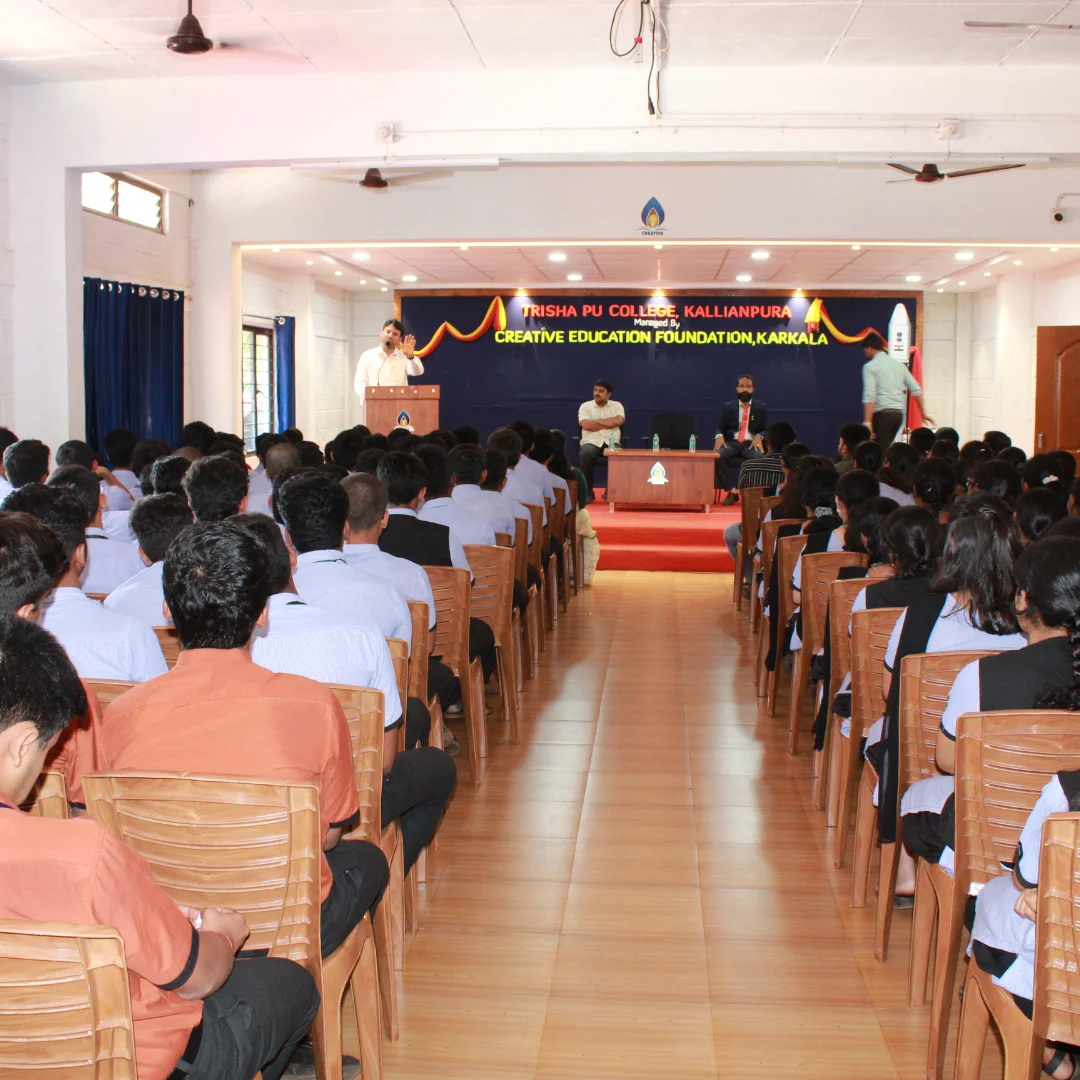
Why Consider Trisha PU College, Udupi?
Trisha PU College provides Science-focused PUC education with PCMB and PCMC combinations and preparation support for competitive examinations including KCET.
For students who want to pursue professional courses after PUC, the college provides an environment where regular academic studies and competitive examination preparation can be pursued together.
Students who require accommodation can also explore the residential and hostel facilities available at the college.
Parents and students should review the current course structure, admission requirements, facilities and competitive exam support before making an admission decision.
KCET Preparation Tips for PUC Students
Here are some practical habits students can develop:
Study Consistently
Regular study is more sustainable than occasional long study sessions.
Clear Doubts Early
Do not allow difficult concepts to accumulate.
Practise Questions
Apply what you learn instead of only reading notes.
Review Mistakes
Keep track of questions you get wrong and understand why.
Revise Frequently
Include older topics in your study schedule.
Take Tests
Use tests to measure preparation and improve time management.
Maintain Balance
Adequate sleep, breaks and physical activity are important parts of a sustainable academic routine.
Frequently Asked Questions
When should I start KCET preparation?
Students can begin building their foundation during PUC after Class 10. Early preparation allows more time for concept development, practice and revision.
Can I prepare for KCET along with PUC?
Yes. Students can combine PUC learning with entrance-oriented practice, regular tests and revision.
Which PU combination is suitable for KCET?
The appropriate combination depends on the student's intended course and current eligibility requirements. Students should check the latest official KCET information and choose their PUC subjects accordingly.
Is PCMC good for KCET preparation?
PCMC includes Physics, Chemistry and Mathematics along with Computer Science. It can be a suitable combination for students interested in engineering and technology pathways, subject to the requirements of the intended course.
Is PCMB suitable for KCET?
PCMB includes Physics, Chemistry, Mathematics and Biology. It provides a broad Science foundation, but students should select the combination based on their intended course, interests and applicable admission requirements.
How many hours should I study for KCET?
There is no single number of study hours that works for every student. A consistent and realistic routine is generally more useful than simply increasing study hours.
Are mock tests important for KCET preparation?
Mock tests can help students practise time management, identify weak areas and become familiar with objective-question practice.
Which PU college is best for KCET preparation in Udupi?
Students should compare faculty, Science combinations, academic support, competitive-exam preparation, assessments, laboratories, study facilities and hostel options before choosing a PU college.
Conclusion
Starting KCET preparation after 10th does not mean putting excessive pressure on yourself. It means developing strong academic fundamentals, practising regularly and building a consistent study routine during PUC.
Students should choose their Science combination carefully, understand their future career goals and look for a PU college that provides appropriate academic and competitive-exam support.
For students looking for KCET preparation along with Science PUC education in Udupi, Trisha PU College is an option to explore.
Before admission, students and parents should review the latest official KCET requirements and compare the college's courses, facilities, academic support and residential options.
Start your PUC journey with a clear academic goal, a structured routine and consistent preparation.